Skin cancer can affect people of any age or skin tone. Cases typically develop on areas that receive regular sun exposure, such as the face, ears, neck, and hands, though it may also appear on skin that rarely sees sunlight. Understanding how skin cancer forms and which signs to watch for can help you make informed decisions about your skin health. Dermatologists may recommend Mohs skin cancer surgery; this is a precise technique that removes cancerous tissue in stages.
What Is Skin Cancer?
Skin cancer occurs when skin cells grow in an abnormal, uncontrolled way. This change is often linked to damage from ultraviolet (UV) radiation produced by the sun. Other factors associated with a higher risk of developing cancer vary, including fair skin, a history of sunburns, numerous moles, a family history of skin cancer, and a weakened immune system. There are three common types, and these are:
- Basal Cell Carcinoma (BCC): The most common form, and it begins in the lower part of the outer skin layer and typically grows slowly.
- Squamous Cell Carcinoma (SCC): It develops in flat cells near the skin’s surface and may extend into deeper layers if untreated.
- Melanoma: A less common but more serious type that starts in melanocytes, the cells that produce skin pigment.
Melanoma is more likely to spread to other parts of the body than BCC or SCC.
How Is It Detected?
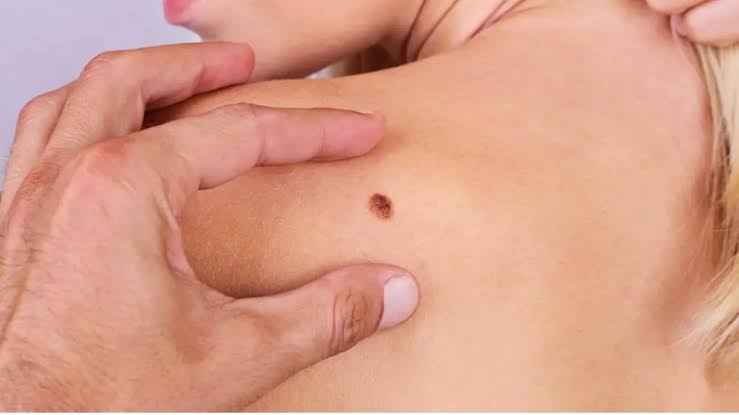
Skin cancer does not always cause pain, so visible changes to the skin are often the first sign. Dermatologists may use the ABCDE guideline to evaluate moles: asymmetry, border irregularity, color variation, diameter larger than about 6 millimeters, and evolving appearance over time. Other common indicators include:
- A new growth or spot that does not go away
- A sore that bleeds, crusts, or does not heal within several weeks
- A pearly or waxy bump
- A firm red nodule or a flat, scaly patch
- A mole that changes in size, shape, or color
Diagnosis typically begins with a full-body skin exam. If a spot appears suspicious, the dermatologist may perform a biopsy, which involves removing a small tissue sample after numbing the area.
What Is Mohs Skin Cancer Surgery?
Mohs skin cancer surgery is usually performed in an outpatient setting under local anesthesia; you stay awake while the area is numbed. The surgeon removes the visible tumor along with a thin layer of surrounding tissue. That tissue is then mapped, processed, and examined under a microscope. If any cancer cells remain at the edges, the surgeon removes another thin layer from only that specific area. This process repeats until no cancer cells are detected in the examined tissue.
Each layer is checked while you wait, so the procedure may take several hours. Once the area is clear, the surgeon will talk with you about your options for wound repair. Mohs surgery is commonly used for basal cell and squamous cell carcinomas on the face. It may also be recommended for tumors that have poorly defined borders or have returned after previous treatment.
Seek Professional Dermatology Care
Regular self-examinations offer a practical way to monitor your skin between dermatology visits. If you notice a new, changing, or unusual spot, a dermatologist can evaluate it and explain which next steps are appropriate. People who have had skin cancer may have a higher likelihood of developing it again, so dermatologists often recommend periodic follow-up skin checks after treatment.