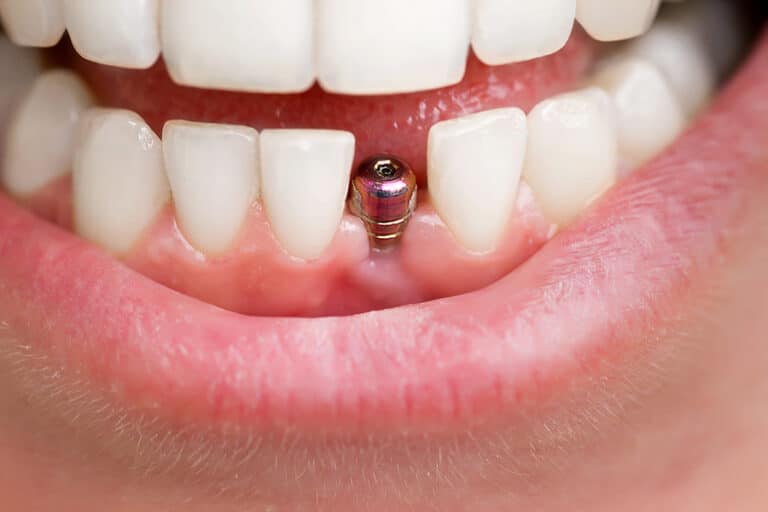
Dental implants are designed to provide a long-term solution for missing teeth, but their lifespan varies depending on several clinical factors. Bone quality, implant placement, oral hygiene, and the quality of the restoration all play a role in how long an implant remains functional. Successful implant treatment also requires careful planning based on the patient’s jaw structure and the type of restoration being used. Here are the key factors that determine how long dental implants last:
Jawbone Support
Jawbone condition directly affects the foundation available for implant placement, and both bone volume and bone quality are key during treatment planning. An implant requires sufficient bone to achieve stability and support healing; previous tooth loss often reduces the amount of bone at the treatment site. Because changes in bone volume vary among patients, a thorough evaluation before treatment provides necessary information about the condition of the implant site.
Some patients have sufficient bone for implant placement, while others need additional treatment before an implant is placed. Bone grafting adds graft material to areas with inadequate bone volume, and the required healing period depends on the type and extent of the procedure. When limited bone height affects implant placement in the upper jaw, a sinus lift increases the available vertical space.
Bone density also influences treatment planning because different densities provide varied foundations for implant placement. Previous extractions, periodontal disease, and prolonged tooth loss are among the factors that affect the amount and condition of available bone. A detailed examination evaluates these factors, and the findings help the oral surgeon determine whether additional preparation is appropriate.
Implant Placement
Implant positioning influences how forces are distributed through the restoration during everyday function. Proper positioning requires evaluating both the available bone and the planned restoration. Digital treatment planning provides a detailed view of the jaw before implant placement; three-dimensional imaging identifies key anatomical structures. Nerves, sinuses, bone contours, and neighboring teeth all contribute to the planned implant position.
Precise placement for dental implants also supports the restoration that will be attached to the implant, and the surgical plan should account for both components. Cone-beam computed tomography (CBCT) provides three-dimensional information about the surgical site. Computer-guided systems provide additional guidance during implant placement. When the implant position is planned in relation to the available bone and the intended restoration, the treatment follows a more coordinated structural plan.
Oral Hygiene
Daily oral care affects the tissues surrounding an implant, and plaque accumulation around the implant contributes to inflammation in those tissues. Changes in the gum tissue, such as bleeding, swelling, or persistent tenderness, can indicate a need for professional evaluation; regular dental examinations help monitor the condition of the tissues around the implant. Several routine habits support good oral hygiene around an implant and its restoration:
- Brush twice daily with a soft-bristle toothbrush
- Clean between teeth and around implant-supported restorations
- Attend scheduled dental examinations
- Report bleeding, swelling, or persistent tenderness
Implant Complications
Implant problems do not always mean that the entire treatment has failed. Looseness, gum inflammation, discomfort, and restoration damage have different causes. Identifying the cause helps determine the appropriate treatment; an early evaluation provides more options when a problem involves the implant or surrounding tissue. Some complications affect the restoration rather than the implant. Others involve the supporting bone or gum tissue. Implant failure and salvage procedures address specific cases that require specialized evaluation, and prompt attention helps distinguish a restoration problem from an issue involving implant stability.
Restoration Options
The restoration attached to an implant affects how the completed treatment functions and feels during daily use. A single implant supports an individual crown, while multiple implants support larger prosthetic restorations. The choice depends on the number of missing teeth, available bone support, bite forces, and the patient’s treatment plan. Different restoration types address varied clinical needs:
- Single-tooth crown: Replaces one missing tooth, and the crown receives support from the implant rather than the adjacent teeth.
- Implant-supported denture: Uses dental implants to provide added support and stability for a removable denture.
- All-on-4 restoration: Uses four strategically positioned implants to support a full-arch restoration.
- Temporary restoration: Provides an interim replacement while the final restoration is being prepared.
- Implant denture: Combines dental implant support with a removable denture to replace multiple missing teeth.
Learn More About Dental Implants
Changes in bite, gum tissue, bone levels, or neighboring teeth may alter how an implant-supported restoration functions years later. Dental implants deserve periodic evaluation as part of ongoing oral care, particularly when symptoms or changes appear. Schedule an evaluation with an oral surgeon to review your implant’s condition and discuss appropriate long-term maintenance.